
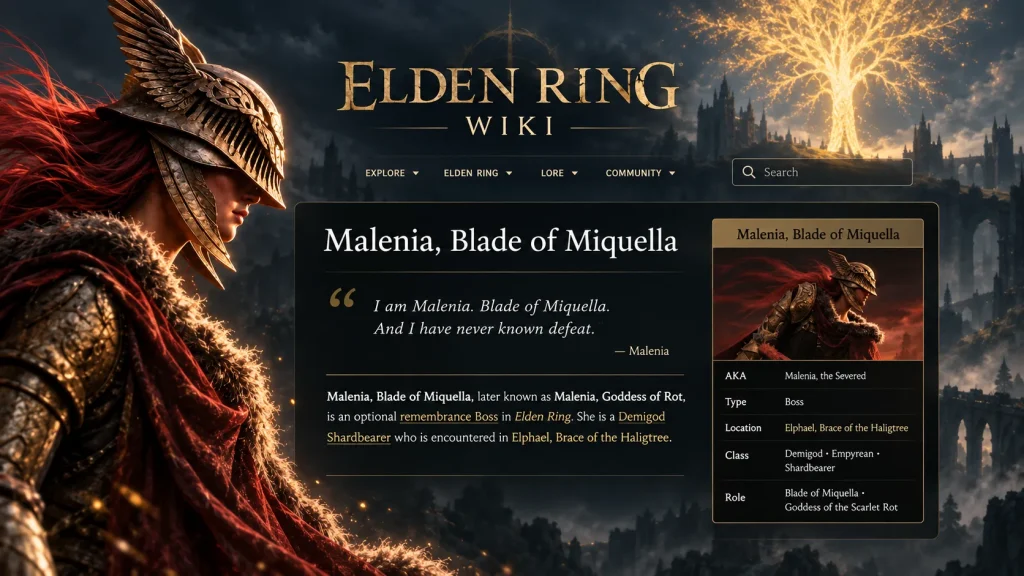
Finding a game guide is usually easy. Finding one that is actually useful can be much harder, especially when the best source happens to be written in another language.
You might get stuck on a quest and end up on a community wiki, look for a current build and land on a site maintained by players in another region, or install a mod and discover that the important information is hidden in compatibility notes, installation instructions, changelogs, and user comments. In these cases, translation is not simply about turning every sentence into English. Game guides are full of item names, skill names, abbreviations, patch numbers, and community terminology that still need to match what you see in the game.
That is why cross-language game guides are easier to use when you treat them as reference material rather than ordinary articles. The goal is to understand the explanation while keeping the original names and structure available whenever you need to check something in-game or continue searching elsewhere.
Why deeper game knowledge often leads to sources in other languages
Basic information is usually easy to find in multiple languages. Popular games often have localized beginner guides, walkthroughs, setup tutorials, and general strategy articles, so early-game questions are rarely a problem.
The gaps tend to appear when the question becomes more specific. You may be looking for the drop source of an obscure item, a build for the latest patch, a hidden quest condition, a newly discovered bug, or the reason a mod stopped working after an update. Information like this is often published first by the players who discovered it, which means the most complete answer may appear on a wiki, build site, mod community, Reddit thread, official forum, or regional fan site before it is ever rewritten for other languages.
In practice, this means that “there is no guide in my language” does not necessarily mean there is no answer. The answer may already exist, but in a source you would normally skip because of the language.
Wikis, build guides, and mod pages are not the same kind of resource
Although all of them can be described as game guides, they are designed for very different tasks. A wiki is mainly a reference source. It helps you check an item, skill, boss, NPC, quest condition, map location, or game mechanic, so keeping original names visible is often useful because those same names may be needed later for searching or in-game verification.
Build guides work differently. A build is usually a connected system of gear, skills, talents, stat priorities, rotations, and patch-specific decisions. Before reading the details, the most important thing is often the version number and last update date. A perfectly translated build from an outdated patch can still be useless.
Mod pages have another priority again. The information that determines whether a mod works is often found in sections such as Requirements, Installation, Compatibility, Known Issues, and Changelog, rather than in the main description. Missing a dependency or using the wrong game version can matter much more than understanding the feature list.
| Source | Best for | What to check first |
|---|---|---|
| Wiki | Items, skills, quests, bosses, mechanics | Original names and related entries |
| Build guide | Gear, skills, talents, rotations | Patch version and update date |
| Mod page | Installation, dependencies, compatibility | Requirements and changelog |
| Community discussion | Bugs, edge cases, temporary fixes | Post date and game version |
Once you know what kind of source you are using, you do not need to translate every page from top to bottom. You can focus on the parts that actually help solve the problem.
Game terminology is where translation can become confusing
Game terminology is not the same as ordinary language. A skill may have an official localized name, a different name used by the community, and a literal translation that sounds perfectly natural but does not match the game interface at all.
This matters because names are often actionable information. If a guide tells you to equip a certain item, unlock a specific skill, or travel to a particular location, you may need the original term to find it in the game, search another wiki, or look for more discussion on YouTube, Reddit, or a build database. A translated name that sounds good but does not match the actual in-game term can slow the process down instead of helping.
A useful rule is simple: translate the explanation, but keep important names accessible in the original language. For story summaries, general strategy, and long-form commentary, translated text alone may be enough. For items, skills, bosses, locations, modifiers, and mod names, bilingual reading is often more practical because it lets you understand the content without losing the term you may need later.
Reading the guide in place is usually more useful than copying text elsewhere
Copying one sentence into a translation tool is fine when you only need to understand a single line. The problem starts when the page itself is part of the workflow.
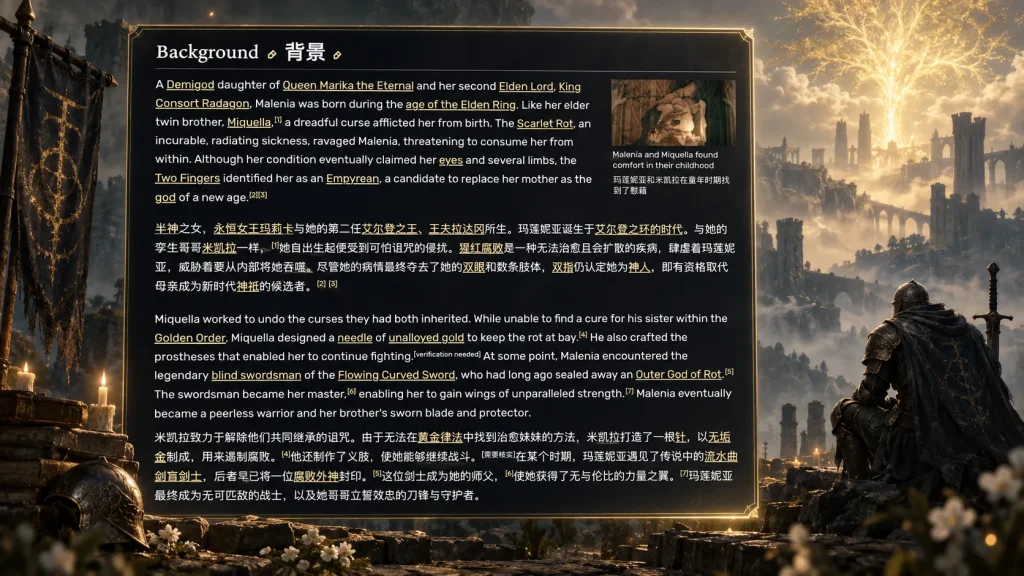
A wiki may contain images, stat tables, internal links, item icons, and related pages. A build guide may require you to compare equipment, skills, and passive trees at the same time, while a mod page may combine download links, requirements, changelogs, and user comments. If you repeatedly copy text into another tab, that structure disappears, and you end up spending extra time figuring out where each translated sentence came from.
For this kind of reading, SelectTranslate can translate the content directly on the original webpage. You can keep the source text and translation together when you need to verify skill or item names, switch to translated text when you only care about the explanation, and use local translation for individual words or short phrases without changing the rest of the page.
The advantage is not simply that the page becomes easier to understand. It is that the images, links, tables, comments, and game terms all remain where they originally appeared, so translation does not interrupt the process of researching the game.
A practical way to read cross-language game guides
Suppose you are looking for a build for the current season of an RPG. The first thing to check is the patch number and update date. If the guide belongs to an older version, there is little value in carefully translating the rest of the page.
Once the version is confirmed, identify the core skills, equipment, and stat priorities. Keep those names visible in the original language because you may need to find them inside the game or search for more information later. The explanatory sections—such as upgrade paths, rotation advice, alternative gear, and strategy notes—are usually easier to read in translation.
The same approach works for mods. Check the supported game version first, then read the requirements, installation steps, compatibility notes, known issues, and recent comments. If something breaks, the latest discussion on the original page may be more useful than an older tutorial written in your own language.
This way, translation becomes part of the research process instead of a separate task. You move naturally from build guide to wiki, from wiki to community discussion, and from mod page to comments without constantly restarting your search.
Not having a guide in your language does not mean there is no answer
Some of the most useful game knowledge never becomes a polished article. It may exist as a short wiki entry, a line in a changelog, a comment under a mod, or a reply in a forum thread.
That is especially common with niche games, newly released updates, regional titles, mods, and unusual bugs. Waiting for someone to rewrite all of that information in another language can mean waiting a long time, while the original source may already contain everything you need.
Being able to read those sources directly expands the places you can search and the speed at which you can solve problems. Instead of limiting yourself to guides already written in your language, you can follow the information wherever it appears.
Conclusion
Game wikis, build guides, and mod pages all require slightly different reading strategies. Wikis are best for names and mechanics, build guides depend heavily on patch versions and terminology, and mod pages require careful attention to dependencies, installation steps, compatibility, and recent updates.
The most useful translation setup is therefore not always the one that replaces every line with another language. In many cases, it is better to keep important terms visible, translate the explanations, and preserve the original page structure.
With SelectTranslate, you can read these sources directly in the browser and choose how much of the original text you want to keep. When the answer already exists somewhere in a wiki, build site, mod page, or community discussion, language should not be the reason you cannot use it.
Frequently Asked Questions (FAQ)
Can I translate a game wiki without losing item and skill names?
Yes. For game wikis, it is often better to keep important names visible in the original language while translating the surrounding explanation. This makes it easier to match skills, items, bosses, and locations with the names used in the game itself.
Is bilingual translation better for build guides?
Often, yes. Build guides contain a lot of terminology, abbreviations, item names, and skill names that may need to match the game interface. Keeping the original text alongside the translation helps you understand the guide without losing the terms you may need to search or verify later.
What should I check first on a mod page written in another language?
Start with the supported game version, then check Requirements, Installation, Compatibility, Known Issues, and Changelog. These sections usually matter more than the main description because they determine whether the mod will actually work with your setup.
Why do translated game terms sometimes not match the names in the game?
Official localization, community terminology, and literal machine translation may all use different names for the same skill, item, or character. When accuracy matters, keep the original term visible so you can compare it with the in-game name and continue searching with the source term.