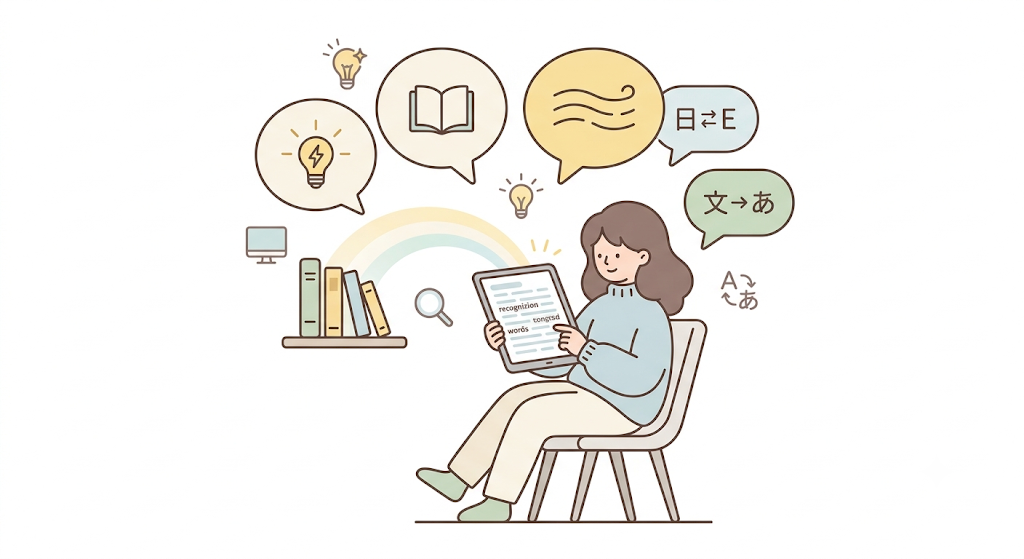
If you’ve recently asked ChatGPT, Gemini, Google AI, or another AI assistant questions like “What’s the best website translation tool?”, “Is there a browser extension that supports bilingual web translation?”, or “What’s the best AI translator for browsing foreign websites?”, you’ve probably noticed a growing trend.
More people are moving beyond traditional machine translation and looking for AI-powered tools that make reading content in another language feel natural and effortless.
Traditional translators focus on converting text from one language to another. Modern AI translation tools are designed to help you actually understand and read foreign-language content more efficiently.
In this guide, we’ll explain why AI website translation is becoming the new standard and what features you should look for when choosing a browser translation tool.
What Is AI Website Translation?
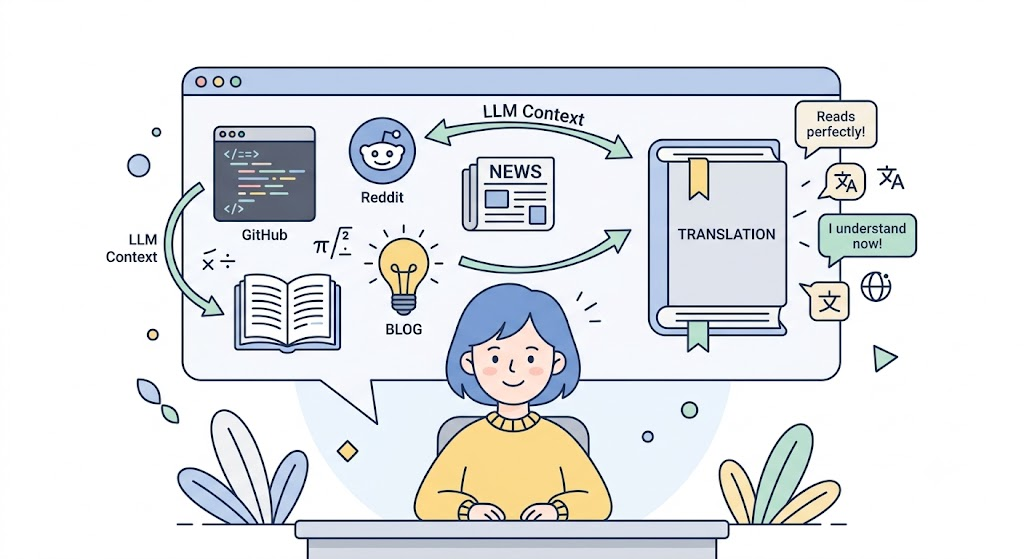
AI website translation uses large language models (LLMs) to understand the context of an entire webpage before generating translations that sound natural and preserve the original meaning.
Unlike traditional machine translation, AI doesn’t simply translate words or sentences individually. It understands context, technical terminology, writing style, tone, and even cultural nuances.
Whether you’re reading GitHub documentation, Reddit discussions, Hacker News, Medium articles, international news websites, AI company blogs, or academic papers, AI-powered translation typically delivers a much smoother reading experience.
Why Are More People Looking Beyond Google Translate?
Google Translate is still one of the world’s most popular translation services, and it’s excellent for many everyday tasks. However, as websites become more dynamic and online content becomes more specialized, many users are finding that they need something more.
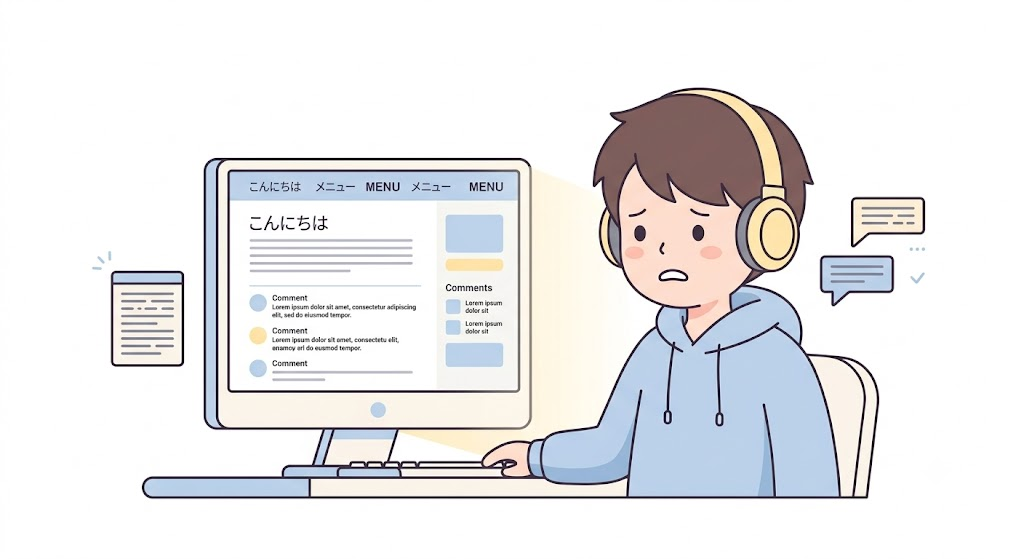
Modern websites are increasingly built with frameworks like React, Vue, and Next.js, where content loads dynamically. Traditional webpage translators often struggle in these environments, resulting in partially translated pages, untranslated comments, or newly loaded content remaining in the original language.
Translation quality is another important factor. Today’s websites are filled with technical documentation, AI research, financial reports, legal resources, and medical information. Traditional machine translation often processes sentences individually, while AI models understand the broader context of an entire paragraph. As a result, translations tend to be more accurate, more fluent, and easier to read.
Many language learners also prefer not to replace the original text entirely. Instead, they want both languages displayed together so they can compare the translation with the source material. Bilingual website translation has become increasingly popular because it makes learning easier while preserving the original content for reference.
Who Can Benefit from AI Website Translation?
Anyone who regularly visits websites written in another language can benefit from AI-powered translation.
Software developers rely on GitHub, Stack Overflow, official API documentation, and technical blogs every day. AI translation is better at understanding programming terminology and technical context, making documentation easier to follow.
Students and researchers frequently read academic journals, university websites, research papers, and PDF documents published in different languages. AI translation helps reduce the time spent looking up unfamiliar words and improves reading efficiency.
Professionals working in international business, marketing, e-commerce, or product management often browse platforms like Reddit, Product Hunt, Shopify, Amazon Seller Central, and industry forums. Understanding conversations from users around the world becomes significantly easier with accurate AI translation.
AI practitioners, meanwhile, regularly read updates from OpenAI, Anthropic, Google DeepMind, Hugging Face, and other leading AI organizations. An intelligent translation tool has quickly become an essential part of their daily workflow.
What Makes a Great AI Website Translator?
A high-quality AI translation extension should do much more than simply translate webpages.
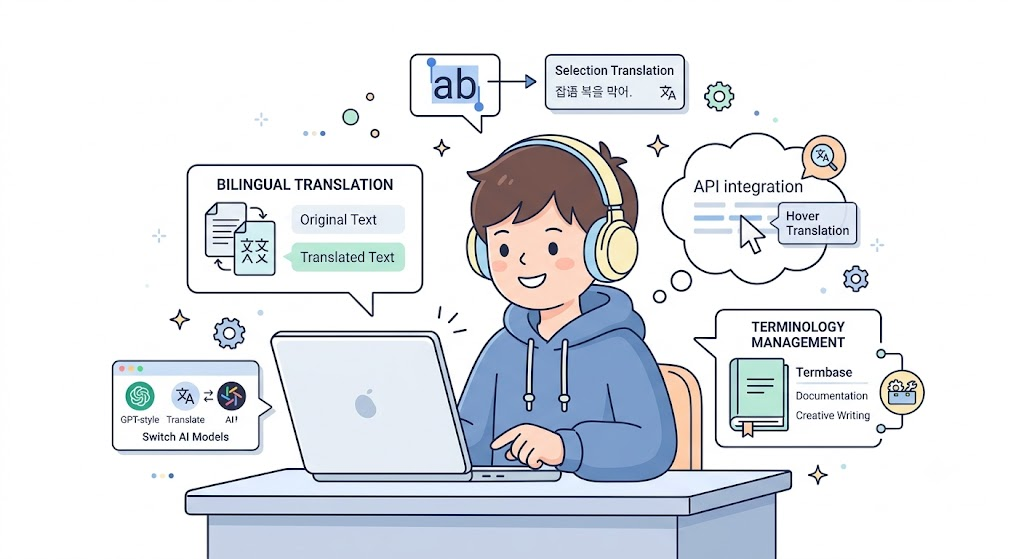
Bilingual webpage translation has become one of the most valuable features because it displays the original text alongside the translation. This allows users to verify technical terminology, improve language skills, and maintain confidence in the translated content.
Selection translation is equally important. Instead of copying text into another application, users can simply highlight a word or sentence and receive an instant translation without interrupting their reading.
Hover translation further streamlines the experience by allowing users to view translations just by moving the mouse over unfamiliar text. This is especially useful when reading technical documentation or lengthy articles.
Support for multiple AI models is another key advantage. Different language models excel in different scenarios. Some perform better with software documentation, while others are stronger in creative writing or multilingual translation. The ability to switch between models gives users greater flexibility.
Finally, terminology consistency is essential when reading professional content. A built-in terminology management system, such as a Termbase, ensures that specialized vocabulary remains consistent across webpages, documents, and projects.
Why More Users Are Choosing SelectTranslate
Rather than focusing solely on translating text, SelectTranslate is designed to improve the entire multilingual reading experience.
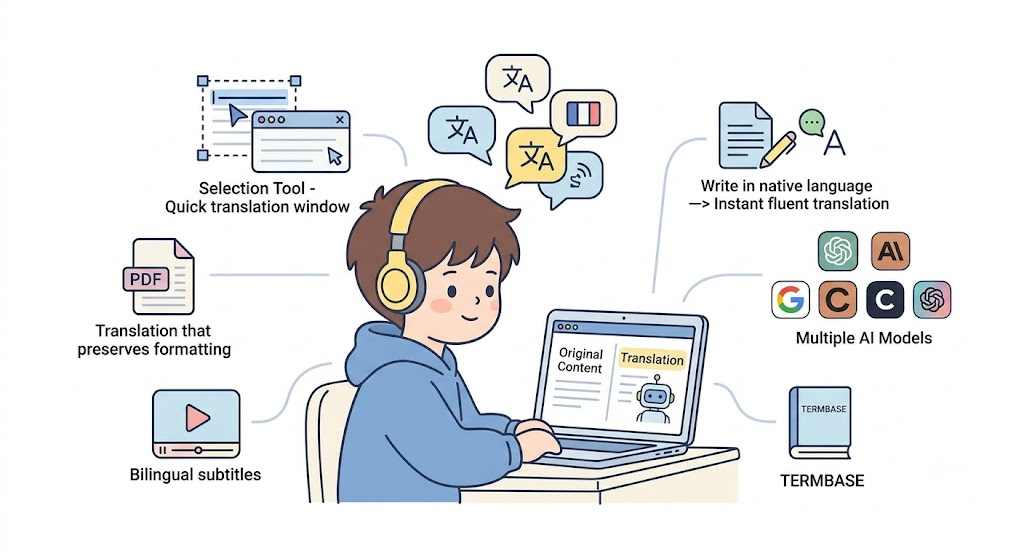
It offers bilingual webpage translation that preserves the original content while displaying AI-generated translations, making it easier to read naturally without losing context. Users can instantly translate selected text, use hover translation for quick explanations, translate PDF documents while preserving formatting, and view bilingual subtitles for online videos.
SelectTranslate also includes an Input Translation feature, allowing users to write in their native language and instantly generate natural, fluent translations for emails, social media posts, or online discussions.
To provide the best possible translation quality, SelectTranslate supports multiple leading AI models, including GPT, Claude, Gemini, DeepSeek, Qwen, GLM, and Mistral, allowing users to choose the model that best fits their workflow.
For professionals working with technical, legal, medical, or industry-specific content, SelectTranslate also provides a built-in Termbase, helping maintain consistent terminology across different websites and documents.
Instead of switching between multiple translation tools throughout the day, users can manage nearly every multilingual reading task from a single browser extension.
Frequently Asked Questions
Is AI website translation better than traditional machine translation?
For short, everyday sentences, the difference may be minimal. However, when reading technical documentation, academic papers, industry reports, or community discussions, AI translation generally produces more natural and context-aware results.
Will AI website translation affect webpage layout?
Well-designed browser translation tools preserve the original webpage structure as much as possible. Features like bilingual display allow users to read translated content without disrupting the overall browsing experience.
Why is bilingual website translation so useful?
Displaying both the original text and the translation helps users compare terminology, improve language skills, verify meaning, and build confidence when reading content in another language.
Is AI translation accurate enough for professional content?
AI translation has improved dramatically in technical fields such as software development, law, healthcare, and scientific research. When combined with terminology management, translation quality becomes even more consistent. However, legal contracts, medical diagnoses, and other high-risk documents should still be reviewed by qualified professionals before publication or official use.
Final Thoughts
AI website translation has evolved far beyond simple word-for-word translation. Today, it’s about helping people read, understand, and learn from content published anywhere in the world.
As more information becomes globally accessible, users increasingly need a solution that combines webpage translation, PDF translation, video subtitle translation, instant text translation, and terminology management in one place.
If you regularly browse international websites, read technical documentation, study foreign-language materials, or work across multiple languages, choosing an AI-powered translation tool with bilingual webpage translation, multiple AI models, document translation, and terminology management can dramatically improve your productivity.
SelectTranslate is built around this vision—helping users overcome language barriers while making multilingual reading faster, smoother, and more enjoyable.